Behind the Brand — Case Study Series, Issue 04
The most expensive mistake a new fashion brand makes is running ads too early.
Not too much spend. Not the wrong audience. Too early.
You can have the right budget, the right targeting, the right creative — and still waste every dirham if the profile the ad is sending people to is not ready to receive them.
This is Issue 04 of the Davincci case study series. Issue 01 covered the campaign. Issue 02 covered the brand identity. Issue 03 covered the content architecture. This issue covers the paid media strategy — why we ran no ads for the first four weeks, and exactly how the three-stage paid sequence worked when we did.
The Rule That Governs Everything
A cold audience clicking on an ad must land on a profile that immediately communicates luxury and identity.
If that profile is not ready, the spend is wasted. Not partially wasted. Fully wasted.
Here is what happens when a new brand runs conversion ads on Day 3 of their launch. A user sees the ad. The creative is beautiful. They click through to the profile. The profile has 4 posts. There is no world. There is no reason to believe.
The user leaves. The spend is gone. The pixel fires an empty signal. The algorithm learns nothing useful.
The organic profile is not just content. It is sales infrastructure. It is the reason a cold audience decides to stay.
Why We Waited Until Week 5
The Davincci paid strategy did not begin until Week 5 — after the profile had at minimum 20 strong organic posts.
By Week 5, the profile had:
- Two weeks of tease content — atmosphere established, curiosity built
- The hero film live — the full brand world visible in one piece
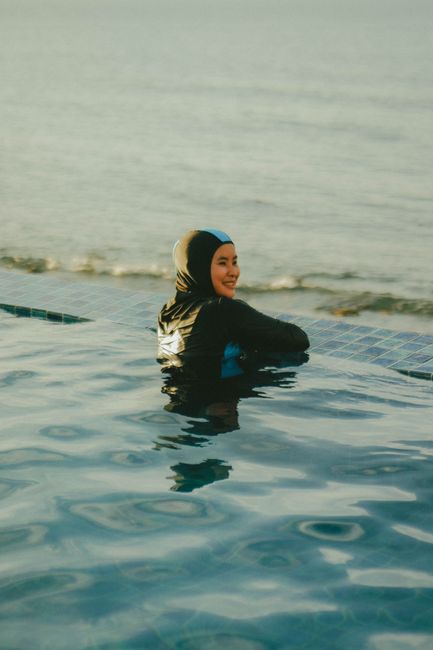
- The hijab collection revealed across multiple colour families
- A grid that communicated luxury, identity, and creative specificity within three seconds
A cold audience clicking on a Week 5 ad did not land on a new brand. They landed on a world that already existed — one with depth, coherence, and visual proof of quality.
That is a fundamentally different conversion environment than Day 3.
The Three-Stage Paid Sequence
Paid media for a fashion brand launch is not a single campaign. It is three distinct stages, each targeting a different audience at a different temperature.
Stage 1 — Awareness
Audience: Cold. No prior brand interaction.
Objective: Reach and profile visits. Not conversions.
Creative: Hero film, strongest editorial portraits.
Running a conversion ad to a cold audience is the equivalent of proposing on a first date. The conversion ad assumes a level of trust that has not yet been earned. Awareness ads earn the trust first.
At this stage, the goal is simple: put the Davincci world in front of the right people. They may not click to buy today. They will remember the visual when they see it again.
Stage 2 — Retargeting
Audience: Warm. People who visited the profile, watched the hero film, engaged with posts.
Objective: Consideration and product interest.
Creative: Colour family reveals, styling reels — still editorial, not promotional.
The retargeting audience is the most valuable at this stage. They self-selected. They watched the film or scrolled the grid. They are already in the Davincci world. The retargeting ad simply extends the invitation.
Stage 3 — Conversion
Audience: Hot. Retargeted users who engaged multiple times, website visitors, abandoned sessions.
Objective: Direct purchase.
Creative: Strongest product images, campaign recap reel, clean CTA.
Never run Stage 3 creative to a Stage 1 audience. The mismatch tells the algorithm you do not know who you are talking to — and the algorithm will price you accordingly.
The Recap Reel as Dual-Purpose Creative
In Week 6, the Davincci launch closed with a campaign recap reel — a summary of the full Là Où L'Eau Se Pose campaign in a single edit.
This piece was designed from the beginning to serve two functions simultaneously:
- Organic content — a closing chapter for the launch narrative on the profile
- Paid creative — the strongest possible awareness and retargeting ad in the campaign
Most brands create separate organic and paid content. The result is a visual inconsistency the audience feels even if they cannot name it: the organic feels editorial and premium, the paid feels like an ad. Trust breaks at the seam.
The Davincci recap reel was cut from the same hero film footage as all organic content. The audience cannot tell what is paid and what is not. The brand identity is consistent at every touchpoint.
What the Metrics Were Actually Measuring
The paid strategy was built to track three things — not impressions, not CPM, not vanity metrics.
| Metric | What it tells you |
|---|---|
| Profile visits from paid | Are the ads building an audience, not just spending budget? |
| Retargeting audience growth | Is the warm pool growing week over week? |
| Conversion rate from warm audience | Are the people who know the brand actually buying? |
A low conversion rate from a cold audience is expected. A low conversion rate from a warm audience is a product or pricing signal — not a media problem. Understanding the difference is what allows spend to be allocated correctly in Month 2.
The Principle Behind the Strategy
Organic builds the world. Paid scales it.
This is the only sequence that works for a luxury or premium fashion brand. You cannot buy belief. You cannot pay to establish an identity. You can only pay to put that identity in front of more people — once the identity exists.
The brands that skip the organic foundation and go straight to paid spend heavily, see early spikes, and watch the audience evaporate when the budget stops. No retention. No community. No brand.
The Davincci paid strategy was built to create the opposite: a brand that earns its audience organically first, uses paid to scale what already works, and builds a customer base that returns without being paid to remember.
Before You Run Your First Ad
Ask one question: if I sent a cold person to my profile right now, would they stay?
If the answer is no, the ad spend waits. The organic work comes first.
When the profile is ready — when the world is built — then paid media does what it was designed to do.
If you want to build the organic foundation and the paid strategy together before your launch, reach out at glorythm.com.
Là où l'eau se pose. Davincci.
Case study by Glorythm — Behind the Brand Series, Issue 04